
PhysicalTherapy
Pediatric physical therapy (PT) helps kids develop the strength, balance, and coordination they need to keep up with their world — from rolling and crawling as a baby, to running and jumping as a toddler, to riding a bike, climbing the playground, and joining the soccer team. Our PTs treat in the play gym, so progress feels like recess.
What is Physical Therapy?
What is Pediatric Physical Therapy?
PT focuses on gross motor skills — the way the whole body moves. Pediatric PTs assess strength, range of motion, posture, balance, endurance, and the way kids move through space. We then design playful interventions that build the missing pieces, whether that's tummy time for a four-month-old or sprinting drills for a nine-year-old.
When should I consider PT?
If your child is missing a motor milestone, moves differently than peers, fatigues quickly, falls a lot, avoids the playground, or is recovering from an injury or surgery, a PT evaluation can identify exactly what's going on and what to do about it.
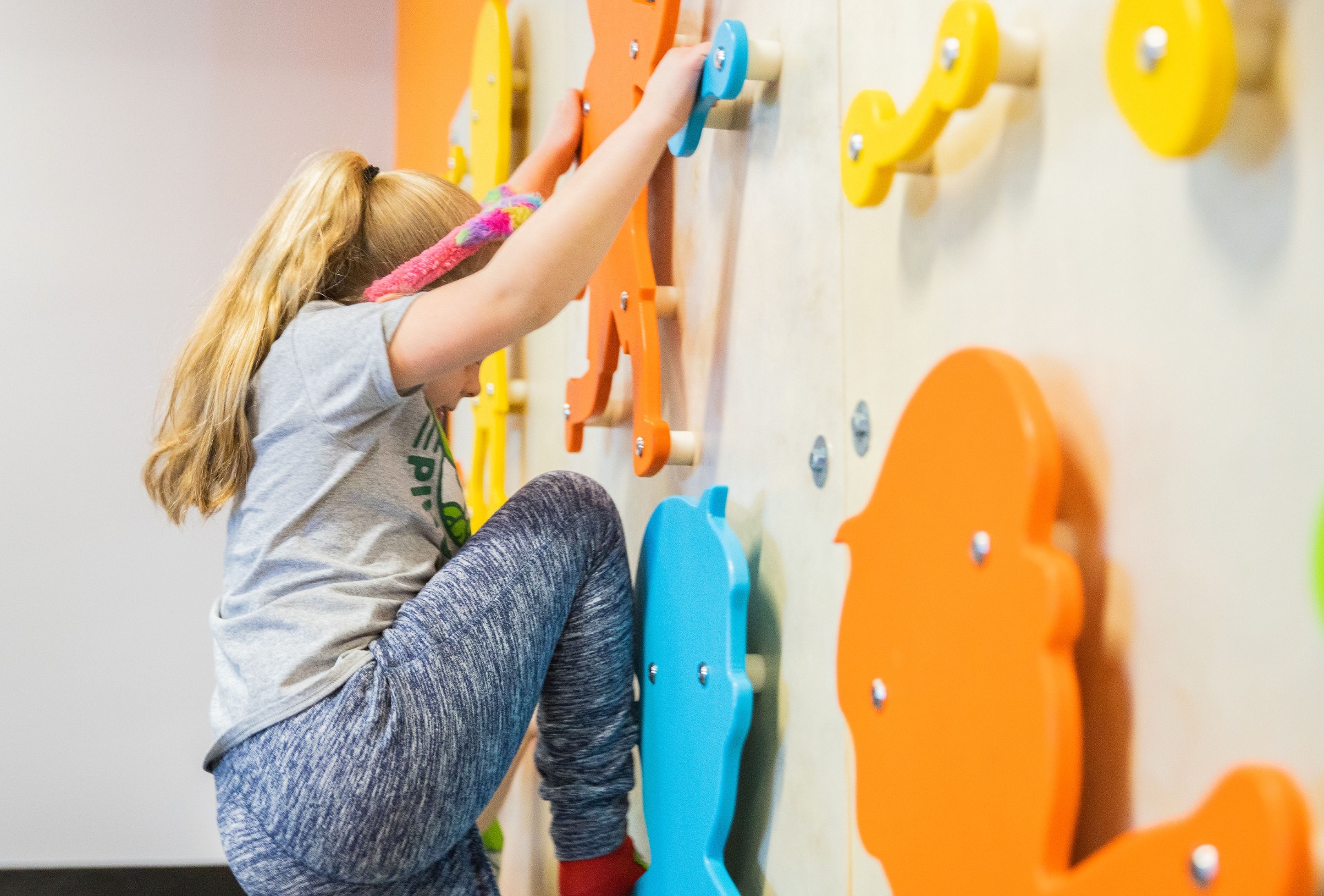
Climbing a rock wall builds the same shoulder stability as a clinical strength exercise. Crashing into a crash pad provides the deep proprioceptive input a child's nervous system craves. Hopping through a hopscotch path is balance, weight shifting, and bilateral coordination — disguised as a game. Our PTs design every session as play with a purpose so kids stay motivated and engaged.
Skills we work on
- Strength & muscle tone
- Balance & postural control
- Gross motor milestones
- Coordination & motor planning
- Endurance & stamina
- Gait & walking patterns
- Equipment use (bikes, scooters)
- Return to play after injury
Signs to watch for
These don't diagnose anything — but if several feel familiar, an evaluation can give you clarity and a plan.
- •Late to roll, sit, crawl, or walk
- •Walks on toes consistently past age 2
- •Tires quickly compared to peers
- •Trips, falls, or runs into things often
- •Avoids playground climbers, slides, or swings
- •Has a notable difference between sides of the body
- •Holds the body in unusual postures (W-sitting, slumped, head tilt)
- •Struggles with bike, scooter, or sports skills age-mates have mastered
Who it helps
- Children working on gross motor milestones
- Kids with low muscle tone or coordination challenges
- Children recovering from injury or surgery
- Toddlers and infants with motor delays
What a session looks like
- 1
Movement check-in
We watch your child move, ask how the week went, and choose where to start.
- 2
Strengthening play
Climbing, jumping, ball play, and obstacle courses target the muscle groups and skills on your plan of care.
- 3
Skill drill
Focused practice on a specific milestone — like single-leg balance, jumping with two feet, or galloping.
- 4
Cool-down & home program
We end calm and share home exercises that fit into your real life — bath time, the drive to school, before bed.
Movement is medicine
Strength and coordination only build with repetition. The kids who attend consistently — and who do their short, simple home program — are the kids who hit their goals.
Helpful next reads
Plain-language guides for parents starting therapy.
Frequently asked
How long are sessions?+
Typically 45–60 minutes. Your therapist will recommend a frequency and duration based on your evaluation and goals.
Will my child do exercises like an adult?+
Not really — exercises are embedded inside games, climbing, and gym play. Kids almost never realize they're 'exercising.'
Milestone tips, classes & news — straight to your inbox.
Add your number for occasional text reminders about open play, camps, and parents night out. Unsubscribe anytime.